The tools on this list aren't just popular. They solve the real problems that keep Shopify stores from growing: too little content, too little trust, and too little time.
Running a Shopify store in 2026 is genuinely harder than it was two years ago. Ad costs are up. Organic reach on most platforms is down. And consumers are more selective than ever. A Deloitte global consumer report found that 47% of shoppers, including 35% of high-income households, now regularly choose quality and trust over price. That means the old playbook of throwing money at Facebook ads and hoping for the best just doesn't work anymore.
What does work is actually building a stack of tools that handles the things you physically cannot do at scale: generating content every day, following up with every customer at the right moment, showing new visitors that real people love your products, and guiding hesitant buyers toward a decision. The five apps below do exactly that.
01. Design Instantly
Most Shopify sellers post product photos to social media and wonder why nobody clicks. The image looks fine. The caption is technically correct. But something about it feels flat. That flatness has a name: it looks like it was posted by a store owner who ran out of time, not by a brand that knows what it is doing.
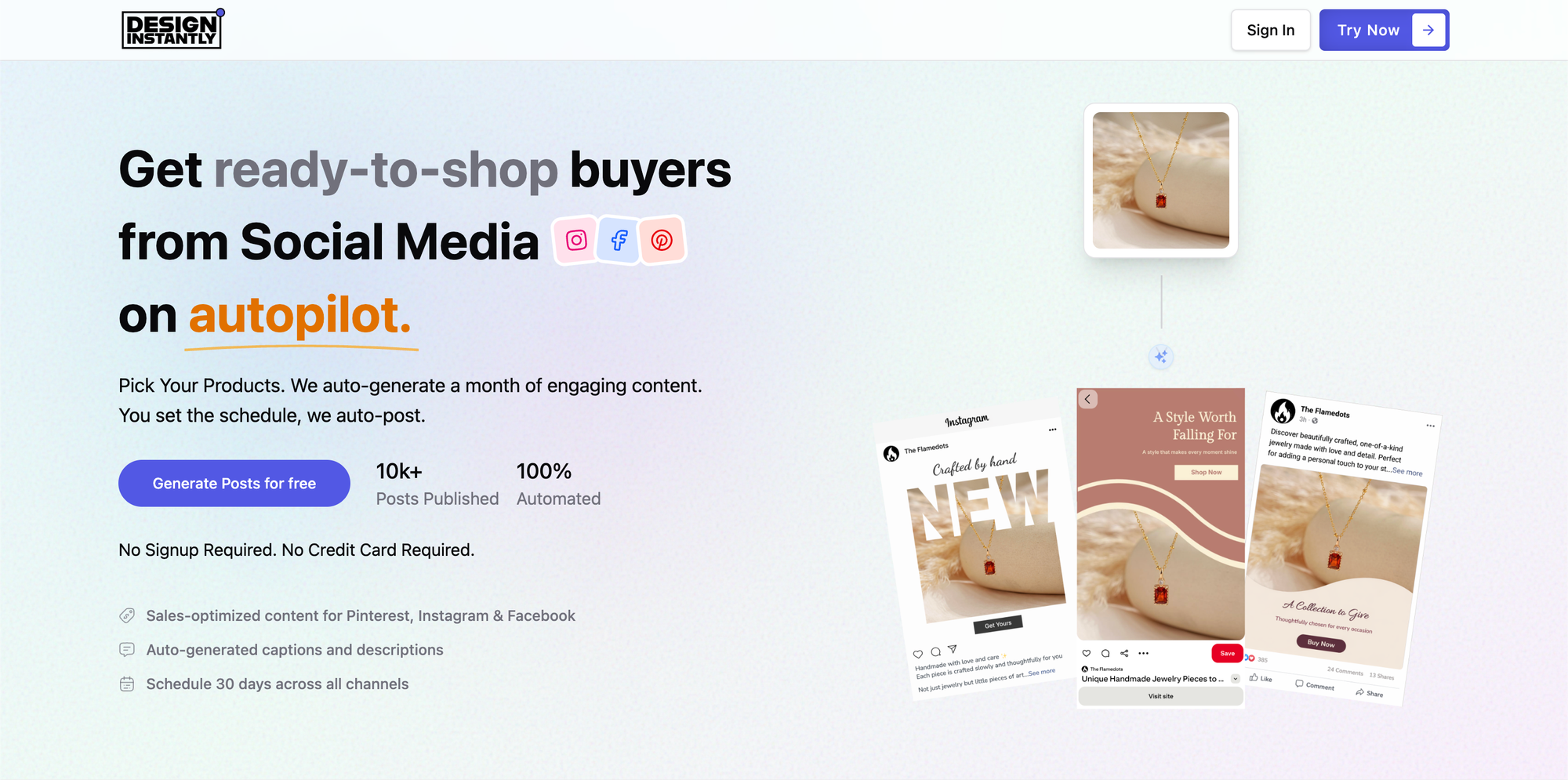
Design Instantly fixes this without requiring a graphic designer or a dedicated social media manager. It connects directly to your Shopify catalog and converts your product listings into finished, professional ad creatives automatically. Real layouts with "Shop Now" buttons, sale price overlays, "Low Stock" badges, and brand colors applied consistently across every post.
The time math here is significant. Creating social content manually for an active store takes roughly 20 to 40 hours a month. Design Instantly brings that down to under an hour. You pick a collection, say your summer sale or a new arrival drop, and it generates 30 days of posts across Instagram, Facebook, and Pinterest in about 10 minutes. For Pinterest specifically, it creates natively vertical pins rather than just recycling square Instagram images, which matters for reach on that platform.
According to TikTok for Business research, 64% of TikTok shoppers have made a purchase after seeing shoppable content on the platform. Volume and visual quality are not optional if you want to compete in those feeds.
The other thing that separates this from basic scheduling tools is that you are not just automating posting. You are automating the design step. The content that comes out actually looks like a paid ad, not a screenshot from your Shopify backend. That visual quality gap is what most "set it and forget it" tools miss entirely. You can install Design Instantly directly from the Shopify App Store and have your first batch of posts ready in 10 mins.
What it does well:
- Bulk generation: pick your product images and get a month of posts in minutes, not hours
- Smart overlays: sale prices, low stock alerts, and new arrival badges applied automatically from your store data
- Pinterest-native formats: vertical pins built for Pinterest, not just repurposed square images
- Captions & Titles control: auto writes captions and titles, descriptions for your posts. Even chooses most relevant board for your pin.
Pricing: Free plan available. Paid from $10/month. Works with Shopify, Etsy, and WooCommerce.
02. Klaviyo: Email and SMS Marketing
Email drives revenue, and Shopify cites Litmus data showing an average email ROI of $36 for every $1 spent. That is why email remains a core ecommerce channel rather than just a newsletter tool.
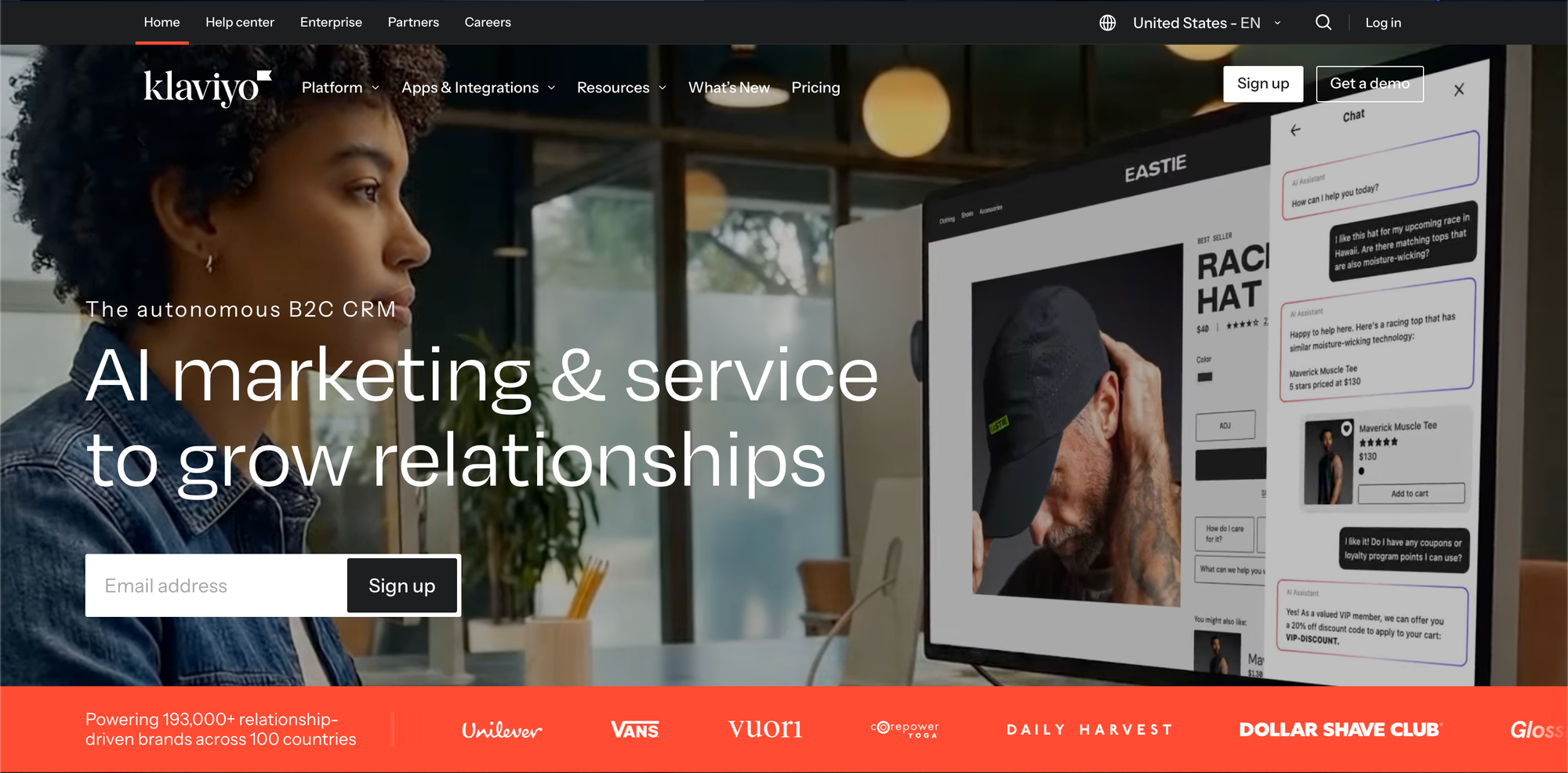
Klaviyo is one of the strongest options for Shopify stores because it syncs customer and order data in real time, which lets you build automation around actual behavior instead of static lists. Its segmentation engine lets you split your audience by purchase history, predicted lifetime value, geographic location, and other store data.
Its biggest advantage over generic tools is automation: instead of sending the same message to everyone, you can send the right message at the right time based on what each customer has done. Klaviyo is especially useful for welcome flows, abandoned carts, post-purchase follow-ups, win-back campaigns, and replenishment reminders.
What it does well:
- Pre-built flows for abandoned carts, welcome series, and post-purchase sequences
- Deep Shopify integration that segments based on real purchase behavior
- Email and SMS from one platform
- AI-powered send time optimization
- Detailed revenue attribution so you know what is working
Pricing: Free up to 250 contacts, with paid plans that scale by list size.
03. Loox: Reviews and Social Proof
New visitors to your store do not know you. They have no reason to trust that your product is as good as you say it is. What changes that is not your copywriting or your brand story. It is seeing that other real people bought something and liked it enough to take a photo and say so publicly.
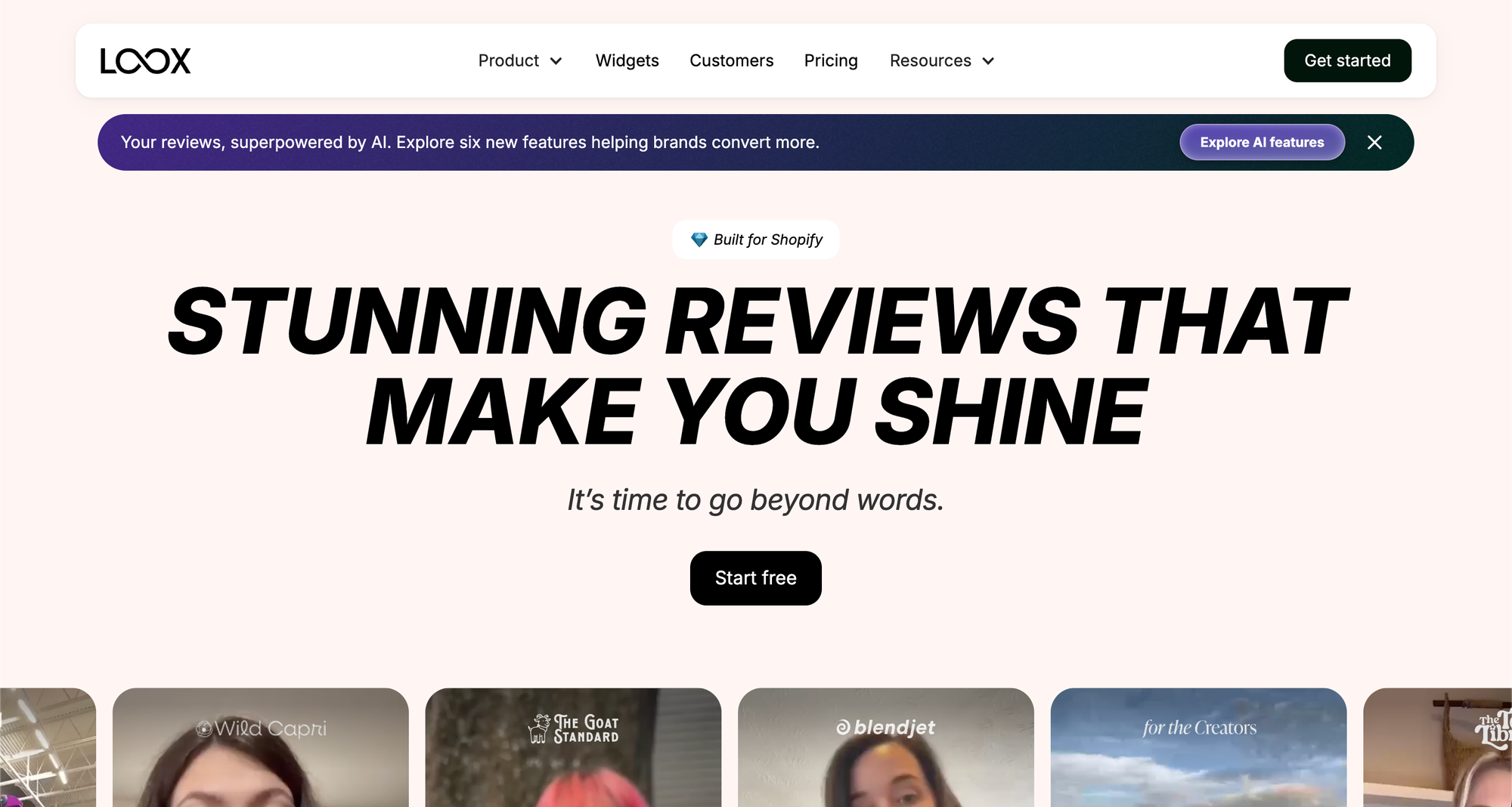
Loox is built around photo and video reviews, and the reason that distinction matters is that a text review saying "great product, 5 stars" does almost nothing for a hesitant buyer. A photo of someone actually using the product in their home, wearing the item, or showing the results they got? That does a lot. The Baymard Institute has found that trust-building elements like this can lift conversions by up to 35% on average ecommerce sites.
Loox automates the collection process. It sends review request emails after purchase with the timing and incentive structure already tested and optimized. It displays those reviews in widgets on your product pages, homepage, and even in the checkout flow. For products with at least five reviews, the platform reports a conversion lift of up to 270%.
Loox is also a certified Google Review Partner, which means your star ratings can show up as rich snippets directly in Google search results. In a world where generative search is reshaping how products get discovered, that visibility matters more than it used to.
It also integrates with Klaviyo, so you can pull your best reviews directly into email campaigns as social proof. Think of Loox as the tool that takes the trust you have already earned with existing customers and makes it visible to everyone who is still deciding.
What it does well:
- Photo and video review collection via automated post-purchase requests
- On-site display widgets for product pages, homepage, and checkout
- Google rich snippets through the certified partner integration
- UGC gallery to showcase customer photos across your store
- Klaviyo integration for embedding reviews inside email campaigns
Pricing: From $12.99/month. Best for converting traffic that is already on your site.
04. Smile.io: Loyalty and Retention
Acquiring a new customer costs five to seven times more than keeping an existing one. That gap has widened in 2026 as paid social costs continue climbing. The stores that are growing profitably right now are the ones that have figured out how to make a first purchase the beginning of a relationship, not the end of one.
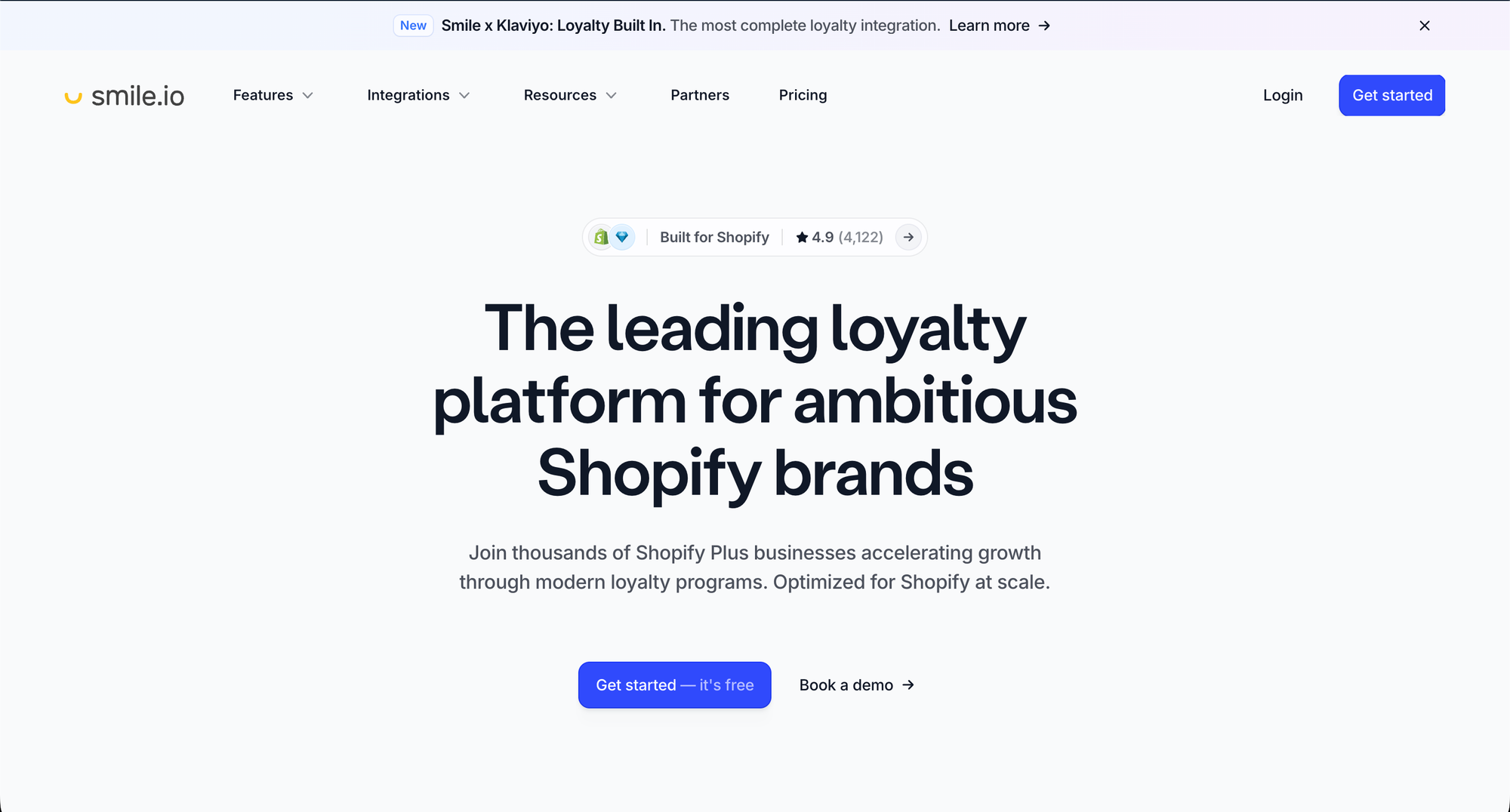
Smile.io is the most widely used loyalty platform in the Shopify ecosystem, and its strength is in how straightforward it is to set up and run. You can launch a points program in the same afternoon you install it. Customers earn points for purchases, social follows, account creation, and referrals. Those points become discounts or perks that bring them back.
The data on loyalty members versus non-members is consistent across the industry: loyalty members spend two to three times more over their lifetime with a brand. For a store doing $50,000 a month, converting a meaningful portion of customers into active program participants has a real financial impact.
The referral program feature is where Smile.io often surprises people. When you give existing customers a unique link and reward both them and their friend for using it, you are turning your happiest buyers into a low-cost acquisition channel. The referral traffic that comes in already has someone's personal endorsement attached to it, which makes it convert at a noticeably higher rate than cold traffic.
Smile.io integrates directly with Klaviyo, so you can include a customer's current points balance in their emails. When someone can see exactly how close they are to their next reward, it creates a specific, concrete reason to come back.
What it does well:
- Points programs that reward purchases, social follows, and account creation
- VIP tiers with accelerated earning rates for your best customers
- Referral system with unique links and reciprocal rewards
- Klaviyo integration for embedding points balances in emails
- Available in 20+ languages for international stores
Pricing: Free plan for small stores. Paid from $15/month. Best for reducing dependence on paid acquisition.
05. Zipchat: Conversational Commerce
Most live chat tools on Shopify stores exist to handle complaints. Someone got the wrong size, their package is late, they want a refund. That is useful, but it is not where the real opportunity is.
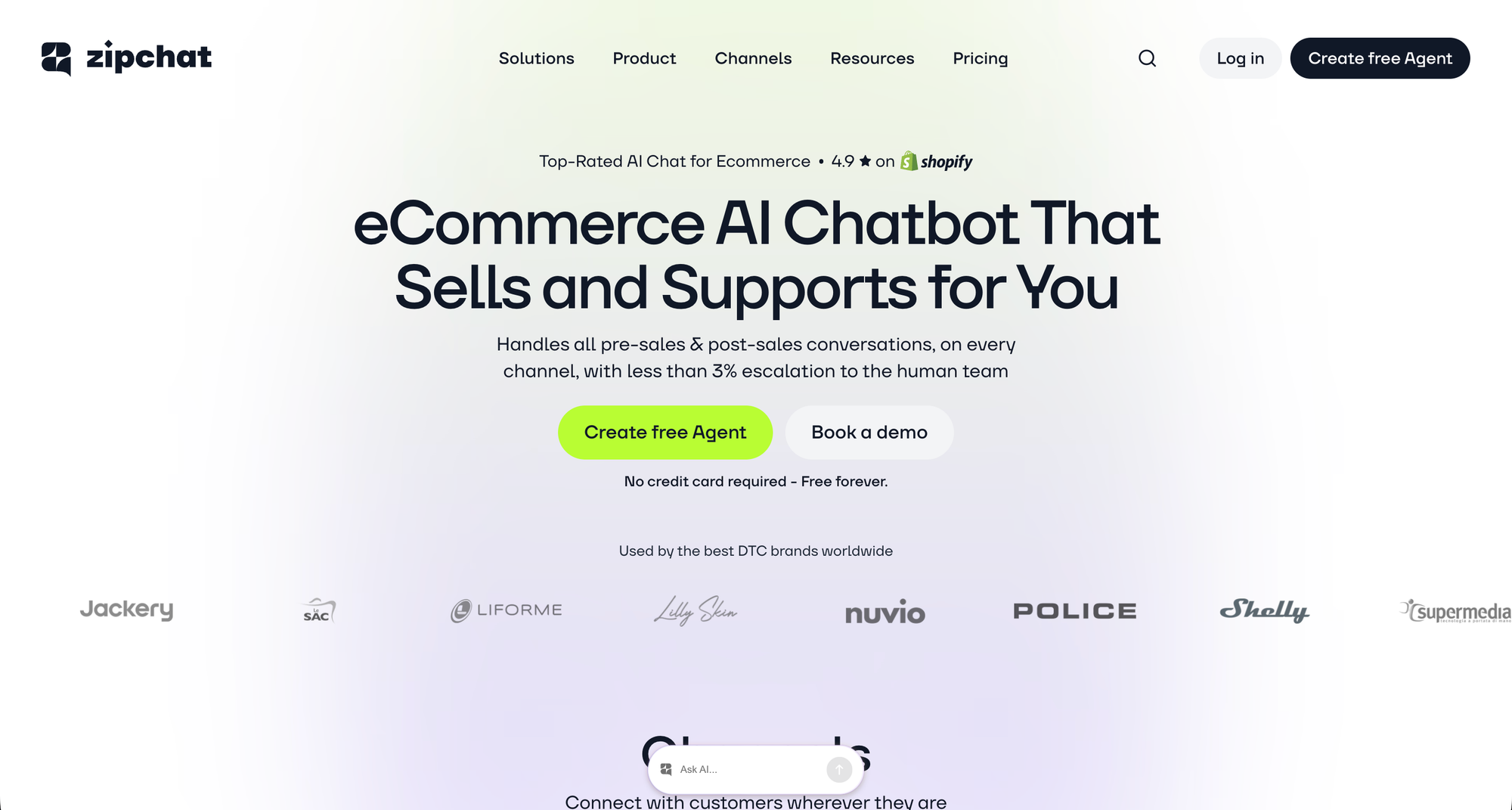
Zipchat approaches the chat window as a sales tool, not a support tool. It uses AI to monitor visitor behavior in real time, and when it detects hesitation signals like someone viewing the same product multiple times, spending a long time on a page without adding to cart, or hovering around the checkout without completing it, it initiates a proactive conversation designed to address whatever is holding that person back.
The performance numbers from their customer base are notable. IntegroPet achieved a 16% chat-to-sale conversion rate. Burger Motorsports reportedly generated over $1 million in revenue traced directly to chat conversations. Less than 7% of conversations require escalation to a human team member. That last number matters because it means the AI is genuinely handling the nuance of sales conversations, not just collecting contact forms.
Gartner projects that agentic AI will influence up to 25% of global ecommerce sales by 2030. Zipchat is essentially an early version of that shift, applied directly to your store today.
One feature worth highlighting is the ability to generate unique, single-use discount codes during a live conversation based on rules you define in advance. If a customer says the price is their hesitation, Zipchat can respond with a real offer in the moment rather than a vague "contact us for deals" deflection. The platform supports over 95 languages, and installation takes under 10 minutes with no custom development required.
What it does well:
- Proactive engagement that detects hesitation signals and starts conversations at the right moment
- Real-time discount code generation mid-conversation based on your pre-set rules
- 95+ languages for international buyers without separate support teams
- Under 7% escalation rate, so human teams only handle genuinely complex cases
- Full Shopify catalog knowledge so it can answer product questions accurately
Pricing: 14-day free trial. Paid from $49/month. Best for stores with decent traffic but a conversion rate stuck below 2%.
Which one should you install first?
It depends entirely on where your biggest gap is right now.
- Design Instantly if you are barely posting to social media, or your posts look like product screenshots rather than ads. This is the one that reclaims the most time the fastest.
- Klaviyo if you have more than a few hundred customers and you are not systematically following up with them. The abandoned cart flow alone often pays for the tool within the first month.
- Loox if you are getting traffic but your product pages feel sparse and unconvincing. Photo reviews from real customers do more for conversion than any copy you can write about your own products.
- Smile.io if your customers buy once and disappear. A points and referral program gives people a concrete reason to return and bring their friends, without spending more on ads.
- Zipchat if you have decent traffic and a reasonable product but your conversion rate is stuck below 2%. A proactive AI sales agent can recover a meaningful portion of buyers who leave without purchasing.
A note on app bloat: resist the urge to install everything at once. Research consistently shows that stores with more than 10 apps have significantly slower load times, and every second of additional load time costs conversions. Install one or two tools, get them working properly, and then add the next one. A lean stack that runs well beats a cluttered dashboard every time.